5 Most Overlooked Skills for School Success (And How Parents Can Build Them at Home)
1. Emotional Regulation
What it is:
The ability for a child to feel big feelings — frustration, excitement, disappointment — and return to calm so learning can continue.
Why it matters:
A child who can regulate their emotions learns better, listens better, and participates more confidently. This is a core pillar of school readiness.
How we build it in class:
We use tools like body scans, breathing exercises, art-based reflection, naming feelings, lesson themes about mindfulness. Children learn that emotions are normal and manageable.
What parents can do at home:
- Model calm language: “I’m feeling frustrated, so I’m going to take a deep breath.”
- Use simple check-ins: “Are you feeling calm, tired, excited, worried?”
- Create a “calm corner” with books, soft toys, or colouring materials.
2. Following Multi-Step Instructions
What it is:
Being able to listen, remember, and complete 2–3 step instructions such as “Take out your book, underline the title, and sit back down.”
Why it matters:
This builds independence, confidence, and helps children transition smoothly into Primary School expectations.
How we build it in class:
We give clear, bite-sized task lists and teach children to repeat steps in their head or check visually. Small routines build big independence.
What parents can do at home:
- Use natural routines:
“Put your shoes on, grab your bottle, and wait at the door.” - Start with 2 steps and slowly add a third.
- Praise the process: “You remembered all the steps by yourself!”
3. Task Persistence
What it is:
The ability to keep going even when something feels difficult.
Why it matters:
This is the foundation of grit, problem-solving, and confidence. All key skills in Primary School and beyond.
How we build it in class:
We offer challenges that are just enough to stretch them, encourage mistake-making, and guide them to find solutions rather than giving answers immediately.
What parents can do at home:
- Break big tasks into smaller steps.
- Use growth-mindset language:
“It’s okay to try again.”
“Let’s figure this out together.” - Celebrate effort, not perfection.
4. Listening and Waiting
What it is:
The skill of pausing, paying attention, and responding after listening, not rushing to act.
Why it matters:
It builds respect, self-control, and a positive classroom community.
This skill also supports comprehension and social communication.
How we build it in class:
We play listening games, use call-and-response routines, and practise turn-taking during discussions and group work.
What parents can do at home:
- Practise short “freeze and listen” games.
- Count to 3 before responding so your child sees what waiting looks like.
- During conversations, model turn-taking:
“You speak first, then it’s my turn.”
5. Social Flexibility
What it is:
Sharing space, adapting when things don’t go as planned, taking turns, and negotiating during play.
Why it matters:
These skills help children make and keep friends, solve conflicts, and feel safe and confident in group settings.
How we build it in class:
We encourage collaborative activities, reflective sharing, and group problem-solving. Children practise adapting ideas, compromising, and working together.
What parents can do at home:
- Give choices: “Blue cup or red cup?”
- Use role-play to practise problem-solving:
“What can you say if your friend wants the same toy?” - Invite cousins/friends for playdates to practise sharing and turn-taking naturally.
Why These Skills Matter More Than Worksheets
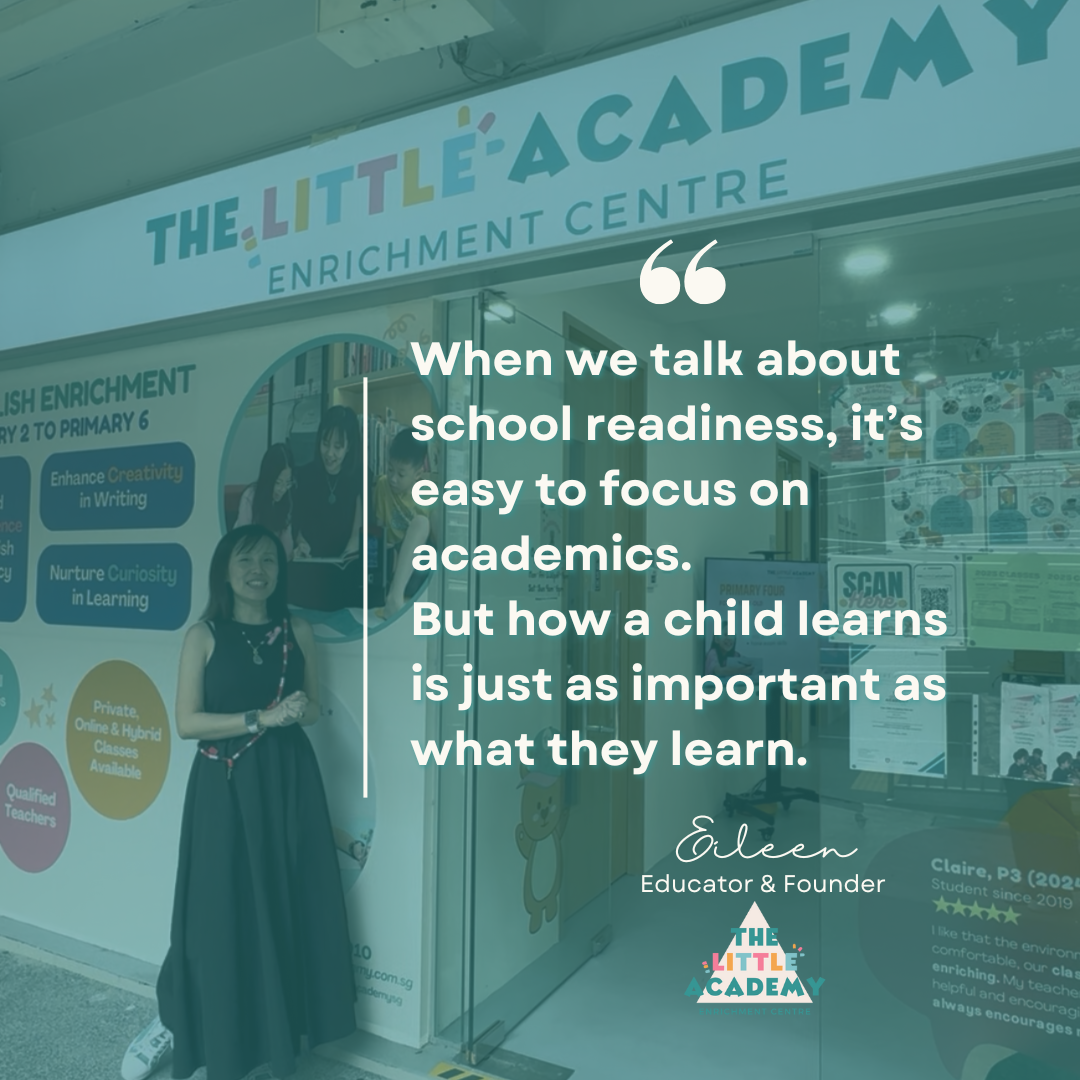
These skills help children become independent, confident, curious, and resilient learners. Qualities that no stack of worksheets can teach. Academic skills are important, but they flourish when these foundational abilities are strong.
When children can regulate their feelings, stay focused, listen, adapt socially, and persist through challenges, they step into school ready not just to cope but to thrive.
– Eileen Tan