“Blending is one of the biggest predictors of early reading success.”
But what exactly does that mean — and how can you support your child at home?
What Parents Need to Know
In early reading, blending refers to the ability to put individual sounds together to form a word. For example:
/s/ + /a/ + /t/ → sat
This skill may sound simple, but it’s a foundational building block for reading success. Research shows that children who can blend sounds accurately and automatically are more likely to become fluent readers and confident learners.
Why Blending Matters
Here’s why blending is such an important skill for early readers:
📌 1. Helps Children Decode New Words
Blending gives children a systematic way to approach unfamiliar words. Rather than guessing based on pictures or context, they can sound out each part and blend to read the word correctly.
📌 2. Builds Reading Fluency
When children can blend seamlessly, their reading becomes smoother and more automatic. Fluent readers can focus on meaning rather than decoding each word laboriously.
📌 3. Makes Comprehension Easier
Fluent decoding frees up cognitive energy for understanding the text. Children who are still struggling to read individual words often miss meaning because they’re too busy decoding slowly.
📌 4. Reduces Guessing
Blending helps children rely on systematic phonics instead of guessing from the first letter, the picture, or memory of the word shape. This builds both accuracy and confidence.
How to Support Blending at Home
The good news? You don’t need to be a teacher to help, just a few fun, consistent practices can make a big difference.
👉 Start Simple
Begin with 2–3 sound words that follow simple phonics patterns:
-
cat
-
shop
-
map
-
bed
Edge toward slightly longer words only when your child is ready.
👉 Say the Sounds Slowly
Help your child by stretching out the sounds:
“/c/ — /a/ — /t/”
Then invite them to “pull” the sounds together to read the whole word:
“c–a–t → cat”
This stretch and blend process is exactly what strong readers practise.
👉 Make It Fun
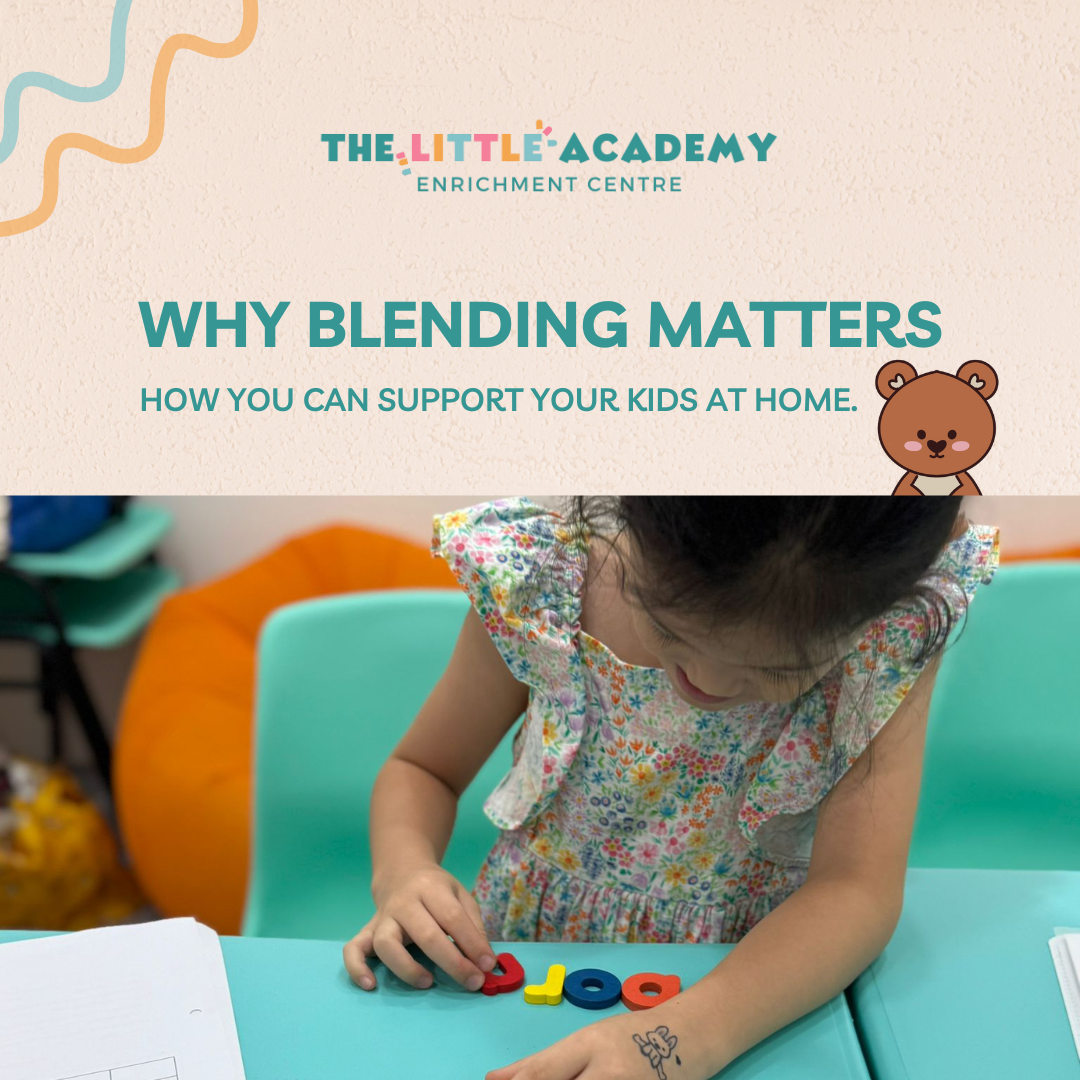
Use items like:
-
letter magnets on the fridge
-
toys or pictures
-
small objects like coins or buttons
Make a game out of sorting sounds or building words together.
👉 Praise Effort, Not Just Accuracy
Research shows that effort praise helps children develop a growth mindset and stay motivated.
Say things like:
-
“I noticed how you kept trying. That’s awesome!”
-
“You stretched those sounds so carefully!”
In Summary
Blending isn’t just a reading strategy. It’s a critical stepping stone in your child’s literacy development. When children can blend sounds confidently:
-
they decode new words more easily,
-
read more fluently,
-
understand text more deeply,
-
and feel confident as readers.
With simple, playful support at home, you can help your child gain this important skill. One sound at a time.