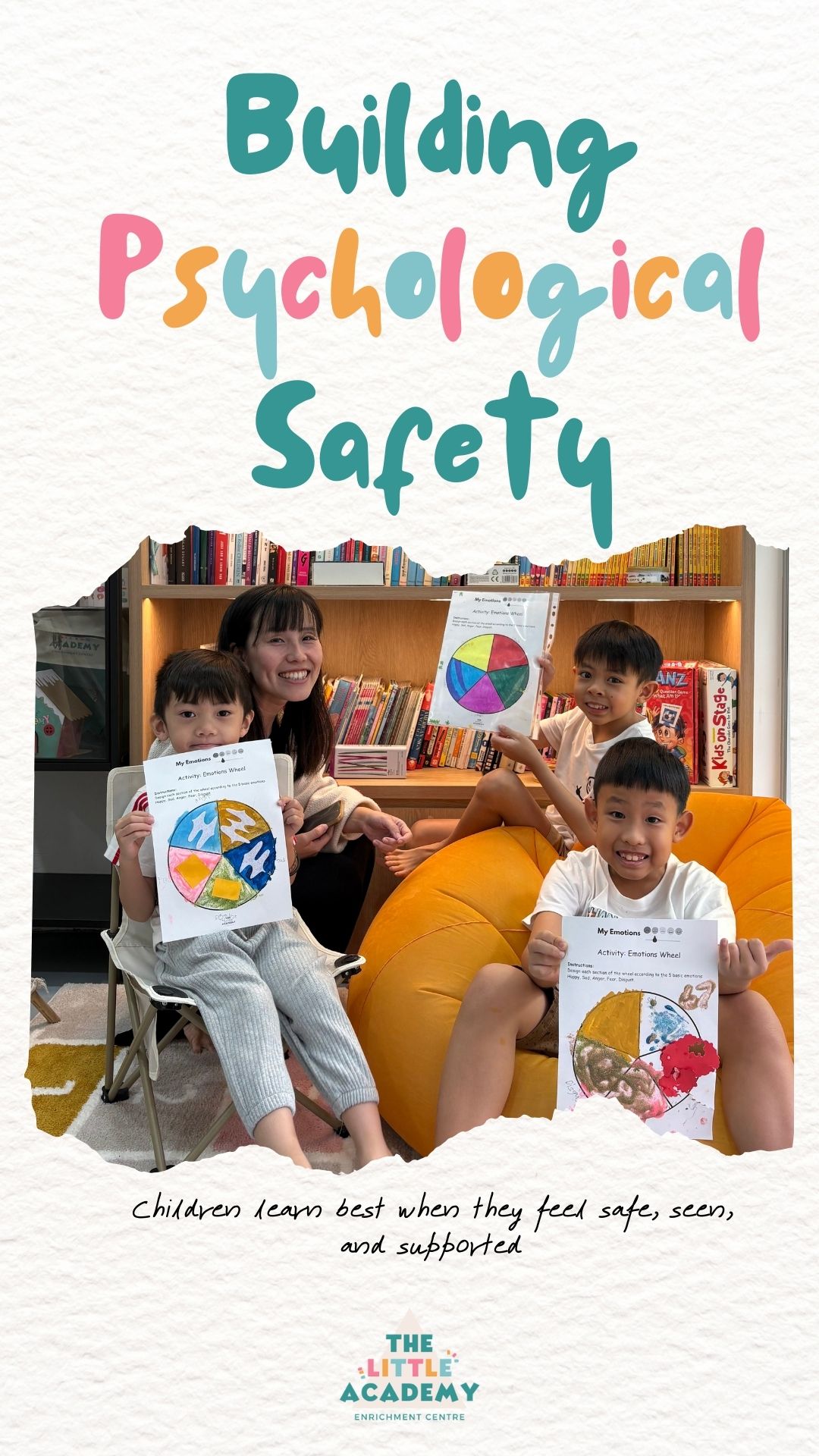
Psychological Safety: The Foundation of Every Classroom
Children learn best when they feel safe, seen, and supported.
Before academic learning can take place, students must feel emotionally secure in their classroom environment. Psychological safety refers to a space where learners feel comfortable taking risks, asking questions, making mistakes, and expressing ideas without fear of embarrassment or judgement.
Research in education and developmental psychology consistently shows that learning is not just cognitive but also emotional and social. When children feel unsafe or anxious, their brains shift into self-protection mode, reducing their capacity to focus, process information, and retain learning.
In contrast, psychologically safe classrooms foster:
-
Engagement
-
Curiosity
-
Confidence
-
Willingness to participate
-
Positive learning behaviours
This is especially important in early childhood and primary settings, where children are still forming beliefs about themselves as learners.
Building Psychological Safety in the Classroom
We nurture safety through:
✔ Warm, respectful teacher–student relationships
✔ Gentle and constructive feedback
✔ Celebrating effort and progress
✔ Normalising mistakes as part of learning
✔ Clear, predictable routines
✔ Pair and group work that builds trust and collaboration
These practices help children feel secure enough to engage fully — academically, socially, and emotionally.
Research shows that language development thrives in emotionally supportive environments, where children feel confident using language imperfectly as they learn.
-
Sound out words independently
-
Take risks in spelling
-
Express ideas creatively
-
Accept feedback and try again
Children know that:
-
Mistakes are expected
-
Effort is valued
-
Their ideas matter
-
Learning happens at different paces
As a result, they are more engaged, confident, and motivated to read, write, and communicate.
Literacy then becomes not just a skill to master, but a tool for expression and connection.
It is about creating conditions where children feel confident enough to reach them.
When classrooms are safe, learning follows.
When learning feels safe, literacy flourishes.