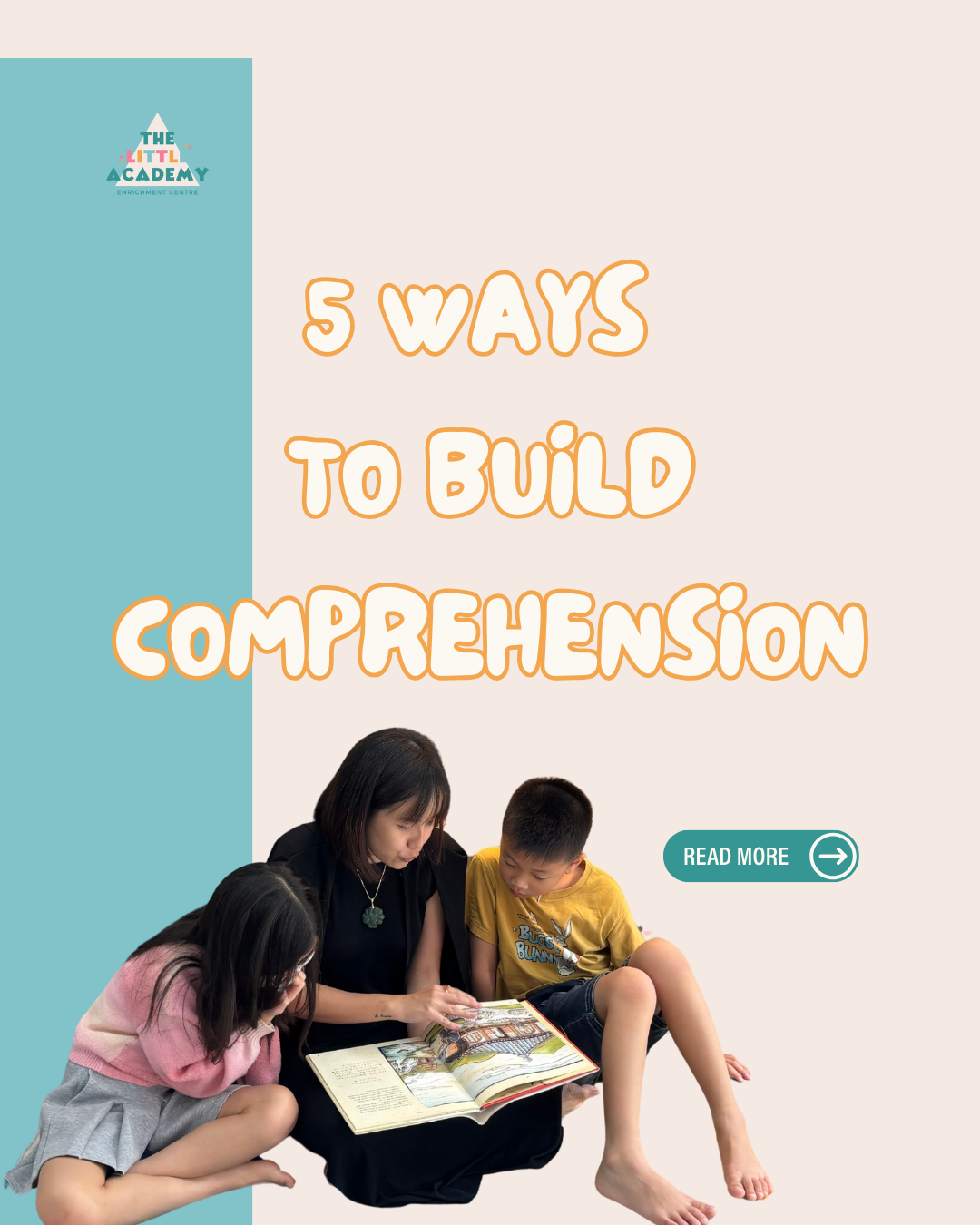
Simple Ways to Build Comprehension
“Comprehension isn’t a worksheet skill. It’s a thinking skill.”
Many children can read the words on a page but struggle to understand the message behind them. This is completely normal as comprehension takes time, practice, and lots of meaningful interactions.
At The Little Academy, we often remind parents that comprehension grows when children are given the space to think, express, and connect ideas. And the good news? You can nurture these skills easily at home too!
Simple, Powerful Ways to Build Comprehension at Home
1. Pause and ask (Prediction Skills):
“What do you think will happen next?”
This encourages prediction: a key comprehension skill that keeps children actively thinking while reading.
Activity ideas:
-
Story Pause Game: Stop before a page turn and ask, “What might happen next?” Let your child draw or act out their prediction.
-
Cover the Last Page: Before finishing the book, cover the ending and let your child guess the ending based on clues.
-
Prediction Jar: Write down predictions on small slips and place them in a jar. At the end, check which predictions were close.
2. Make connections (Text-to-Self Skills):
“This reminds me of when we…”
Linking the story to real-life experiences helps children understand characters, emotions, and motivations better.
Activity ideas:
-
Memory Match: After reading a scene, ask: “Has something like this happened to us before?” Share your own example too.
-
Emotion Connection: When a character feels an emotion, ask: “When was a time you felt this way?”
-
Family Story Time: Pick a scene (e.g., a picnic, a birthday, a rainy day) and let your child share a personal experience related to it.
3. Explain new words gently (Vocabulary):
Keep it short, simple, and natural.
No long definitions needed, just enough for them to follow the story.
Activity ideas:
-
5-Second Definition: Explain a word in one simple sentence. Example: “Gigantic means very big.”
-
Show + Tell: Point to pictures, act out, or use objects around the house to show what the word means.
-
Word Swap: Replace the difficult word with a simple one your child knows, then return to the story.
4. Reread favourite books (Fluency + Understanding):
Repetition creates familiarity. With each reread, their understanding deepens and their confidence grows.
Activity ideas:
-
Change the Voice: Reread the story using silly voices for different characters to make repeated readings fun.
-
Spot Something New: Tell your child, “Let’s see if we can find something we didn’t notice the last time!”
-
Role Reversal: Let your child “teach” you the story during a reread. They will naturally explain and summarise.
5. Use pictures (Inference Skills):
Ask questions like:
“What do you see?”
“How do you know?”
Pictures train children to infer and to read beyond the words.
Activity ideas:
-
Picture Detective: Ask your child to study the illustration and tell you clues about what’s happening.
-
Before Reading: Look at only the pictures first and guess what the story might be about.
-
Emotion Hunt: Ask your child to spot how characters feel based on facial expressions or body language.
Don’t Pressure Them
Try not to stop them at every sentence, as it can disrupt the flow and enjoyment.
Let reading stay fun first and understanding will follow naturally.
Small steps, done consistently, make a huge difference.