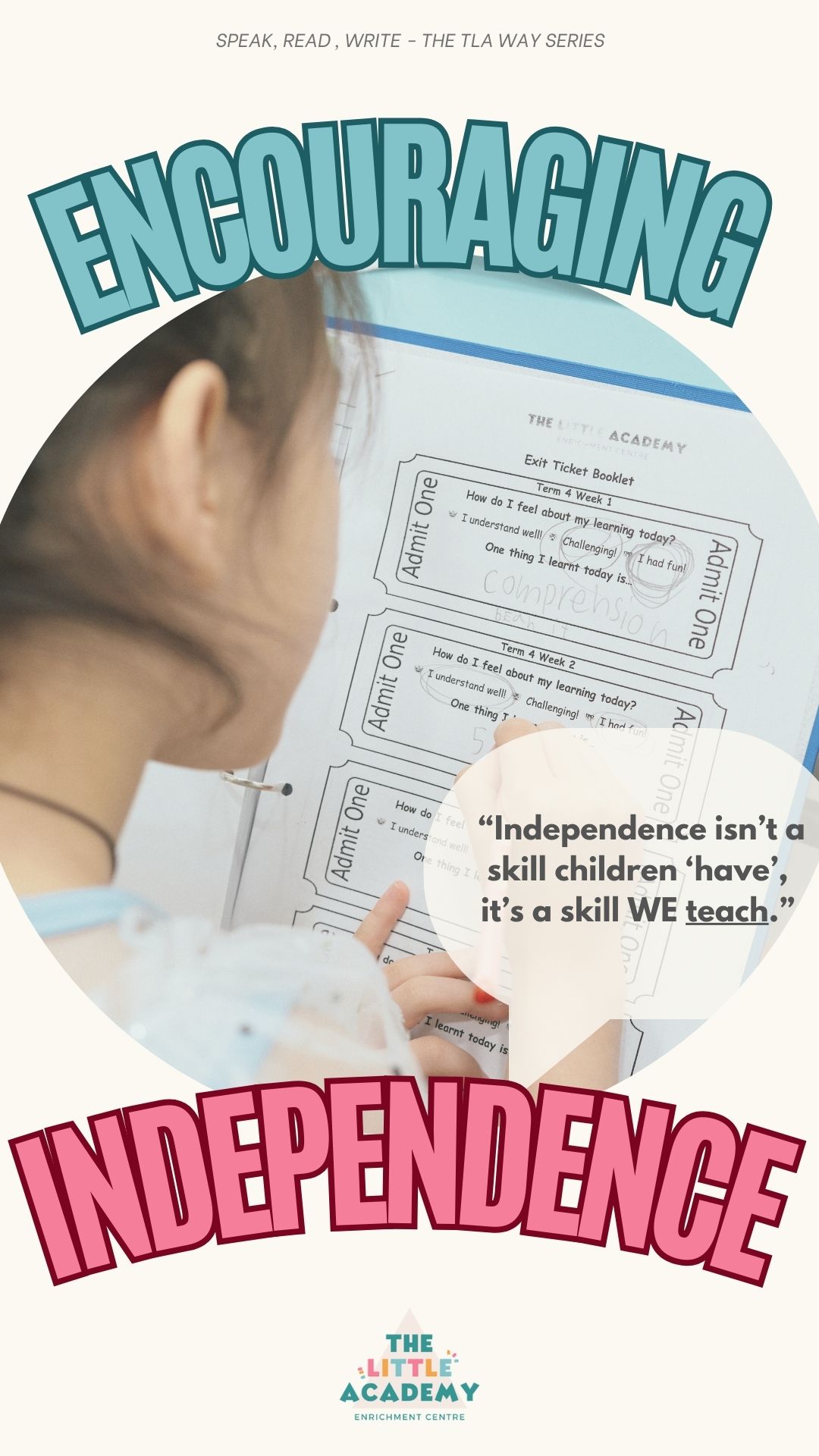
Independence Starts at Home: How Parents Can Build Confident, Capable Learners
Independence isn’t a skill children naturally hone as they grow older but it’s a skill they learn.
And for young children, some of the most powerful opportunities to learn independence don’t happen in school.
They happen at home, in everyday routines, small choices, and moments where we pause before stepping in to help.
When parents intentionally create space for independence, children develop confidence, resilience, and readiness for school learning.
Why Independence Matters for Learning
Research in child development shows that children learn best when they feel capable and trusted.
According to Self-Determination Theory (Deci & Ryan), children are more motivated and engaged when they experience:
-
Autonomy – “I can try this myself”
-
Competence – “I know how to do this”
-
Support – “Someone is there if I need help”
When children are always rushed, corrected immediately, or helped too quickly, they may become dependent—even when they can do more.
Independence grows when children are given:
-
Time to try
-
Permission to make mistakes
-
Encouragement instead of rescue
What Independence Looks Like at Home (That Parents Often Miss)
Independence is not about doing everything perfectly. It looks like:
✔ Trying before asking for help
✔ Packing their own bag (even if it’s messy at first)
✔ Sounding out words instead of asking for spelling
✔ Solving small problems independently
✔ Following routines with fewer reminders
These moments build the habits children need for reading, writing, and school learning.
Practical Ways Parents Can Support Independence at Home
✔ Give Small Responsibilities
Simple tasks build a sense of capability:
-
Putting toys away
-
Preparing their school bag
-
Setting the table
-
Organising books or stationery
These responsibilities tell children: “I trust you.”
✔ Encourage “Try First”
Before helping, try saying:
-
“What do you think we should do first?”
-
“Can you try one more time?”
-
“Let’s figure it out together.”
According to Vygotsky’s learning theory, where children grow when they attempt tasks within their ability and with gentle guidance, not immediate answers.
✔ Let Children Solve Small Problems
If a puzzle piece doesn’t fit or a word is tricky, pause.
Give them time to think.
Struggle (within limits) helps children develop problem-solving skills and perseverance, which are essential for literacy and learning.
✔ Praise Effort, Not Just Results
Instead of:
❌ “That’s correct!”
Try:
✔ “I like how you tried again.”
✔ “You didn’t give up.”
✔ “You figured that out on your own.”
This builds a growth mindset (Carol Dweck), helping children see learning as a process.
✔ Encourage Independence in Reading & Writing
When children read or write:
-
Let them sound out words
-
Accept invented spelling
-
Encourage self-checking (“Does this make sense?”)
Perfect spelling can come later.
Confidence must come first.
What to Remember as Parents
Independence grows slowly—and imperfectly.
There will be spills, misspellings, and messy attempts.
But every time a child tries on their own, they are learning:
-
“I am capable.”
-
“I can figure things out.”
-
“Learning is safe.”
And that belief stays with them far beyond the early years.
You don’t need more worksheets or pressure.
You need patience, trust, and space.
When home and school work together to support independence, children don’t just become better students —
they become confident learners for life.