Shifting from Play to Academic Literacy: Helping Children Make the Transition
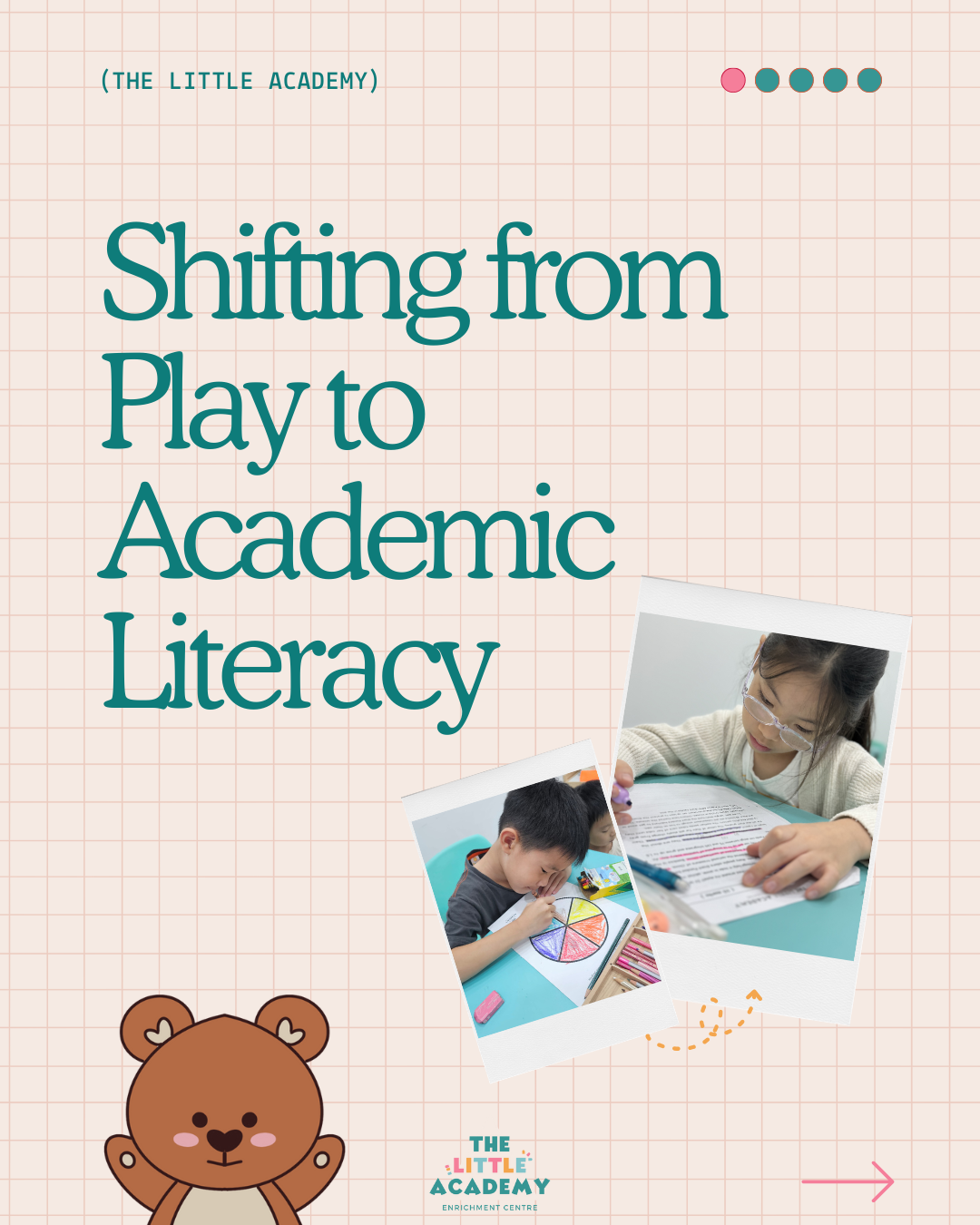
The transition from play-based learning in preschool to academic literacy in primary school is a big step for many children. While play is an essential part of early childhood development, building literacy skills requires a gradual shift from hands-on, imaginative activities to more structured reading, writing, and comprehension tasks.
Many children struggle during this stage because their learning environment changes. In preschool, learning is often exploratory, social, and play-focused, which fosters creativity, problem-solving, and confidence. When children move to formal literacy learning, they are expected to focus, follow instructions, and work independently—skills that require practice and guidance.
At The Little Academy, we approach this transition by focusing on foundational literacy skills while keeping learning engaging and meaningful. Here’s how we support children:
- Decoding vs. Encoding: We help children understand that recognizing a word (reading) is different from using it in writing. Activities start with identifying letters and sounds, then gradually move toward forming words and sentences.
- CVC Words and Letter Blends: Children practise simple consonant-vowel-consonant (CVC) words and letter blends to build confidence in spelling and reading.
- Hands-on Learning: Even as lessons become more structured, children still engage in interactive activities—like letter hunts, word games, and story-based exercises—to keep learning fun.
- Small, Gradual Steps: We introduce academic concepts in bite-sized chunks, ensuring children can focus and master one skill before moving to the next.
By providing a gradual, supportive transition from play to literacy, children not only develop strong reading and writing skills but also maintain their curiosity, creativity, and confidence—key foundations for lifelong learning.
Avoiding Two Common Extremes
In education, we often see two extremes:
- Pushing academics too early
This can lead to anxiety, avoidance, and loss of motivation. - Delaying structure for too long
This can make the academic transition overwhelming later on.
The goal is balance –
where children feel safe, capable, and supported as expectations increase.
What Parents Can Do at Home
Parents play an important role in helping children transition from play to academic literacy. Simple practices can make a big difference:
- Read together daily and talk about the story
Example: After reading a book, ask questions like, “What do you think will happen next?” or “Why did the character do that?” - Encourage your child to explain their thinking
Example: When solving a puzzle or writing a sentence, ask them, “How did you figure that out?” or “Can you tell me why you chose that word?” - Celebrate effort, not just results
Example: Praise them for trying a tricky word or finishing a difficult drawing, even if it’s not perfect. - Keep routines consistent
Example: Have a set time for reading, writing, or word games each day. Consistency helps children know what to expect and builds focus. - Partner with educators rather than working in isolation
Example: Ask the teacher what your child is learning that week and try simple follow-up activities at home, like playing a word-matching game or storytelling together.
Academic confidence grows best when school and home work together. By incorporating small, meaningful activities daily, parents can help children develop reading, writing, and thinking skills naturally while still keeping learning fun.
A Thoughtful Transition Builds Confident Learners
Shifting from play to academic literacy is not about taking childhood away.
It’s about honouring how children grow emotionally, cognitively, and socially.
When done well, this transition:
- Builds confidence
- Strengthens thinking skills
- Creates learners who are curious, capable, and resilient
And that’s what meaningful education is really about.